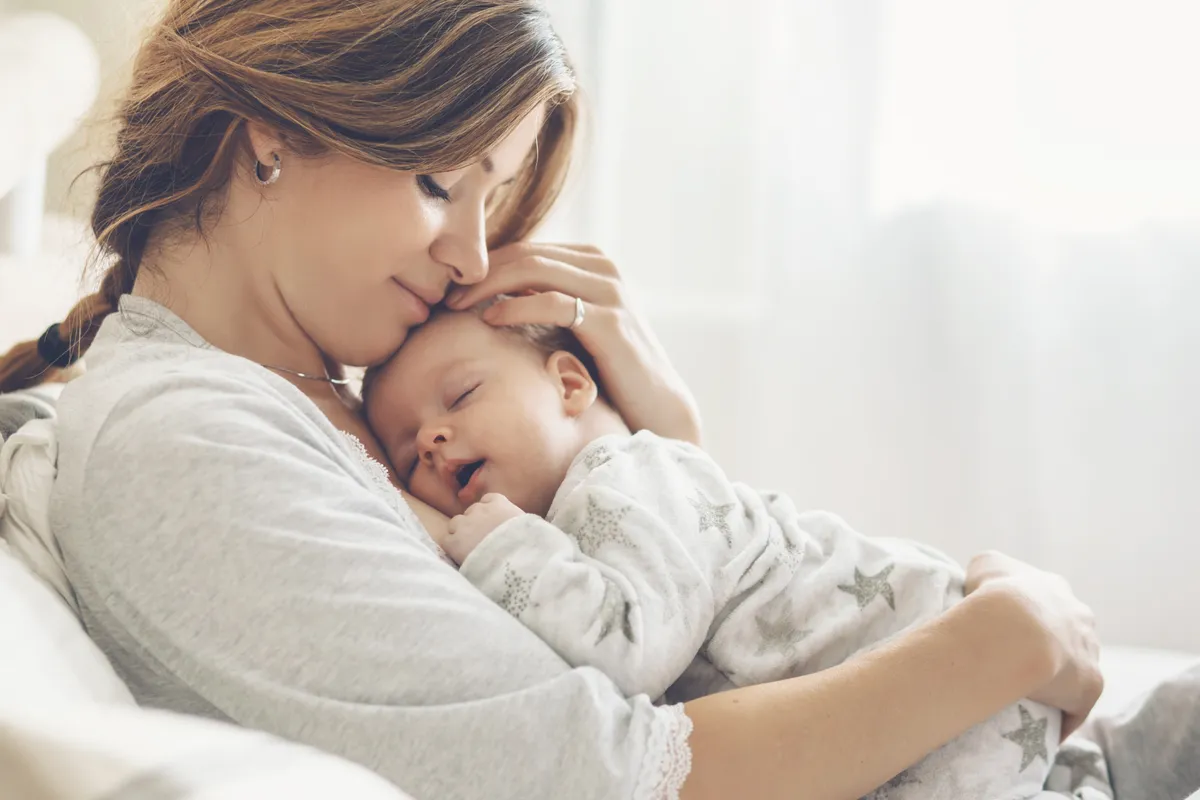
Why sleep training is so controversial?
Sleep training, sleep training methods
Months ago, after 4th wake up of the nights, I typed "is sleep training harmful for babies" into my phone.
Half the results told me I would damage her for life. The other half told me I was giving her a gift and should put headphones on and wait it out. Both sides sounded completely certain. Neither of them sounded like they were talking about my baby.
I have a consulting background, so when something does not add up, I go and read the source. Here is what I found.
Sleep training is not one thing
Most of the argument happens because one phrase is being used for methods that look nothing alike.
Extinction, or cry it out. Bedtime routine, baby goes in the crib, door closes, no one goes back in until morning. This is the method that made the term famous, and it is the one most people picture.
Graduated extinction, better known as the Ferber method. Same idea, but with timed checks at increasing intervals. Richard Ferber himself has said his approach was misunderstood and that he would not recommend it for every child who sleeps badly.
The chair method. A parent sits next to the crib and moves a little further away every few nights until they are outside the room.
Pick up, put down. The baby is picked up and comforted whenever they cry, then put back down once calm. Often many times in one night.
Bedtime fading. Bedtime temporarily moves later to match the baby's actual sleep pressure, then moves back earlier once falling asleep gets easier.
Responsive or gentle approaches. The parent stays, responds, and slowly reduces how much help they give over a period of weeks.
Two moms can both say "we sleep trained" and be describing opposite nights.
Almost all of the research studied one end of that list
This is the part nobody says out loud. The studies people argue about are studies of extinction and graduated extinction, because those methods are simple to define, simple to instruct, and simple to measure. The gentler end of the list is much harder to standardize, so it rarely gets tested.
What those studies actually found is not what the internet says they found.
Gradisar and colleagues (Pediatrics, 2016) ran a randomized controlled trial with 43 infants aged 6 to 16 months, comparing graduated extinction, bedtime fading, and a sleep education control group. They measured infant stress through salivary cortisol, and twelve months later the mother and child pairs went through the strange situation procedure, which is the standard laboratory assessment of attachment. There were no significant differences in secure versus insecure attachment between the groups, and no differences in emotional or behavioral problems.
Price and colleagues (Pediatrics, 2012) followed 326 children to age six after a behavioral sleep program delivered at 8 to 10 months. They looked at emotional and conduct scores, closeness and conflict in the parent child relationship, chronic stress, and maternal mental health. They found no differences between the intervention and control families on any of it. Their conclusion was that these techniques have no marked lasting effects, positive or negative.
Bilgin and Wolke (Journal of Child Psychology and Psychiatry, 2020) tracked 178 infants and found no adverse effect on attachment or behavioral development at 18 months.
So where does the harm story come from?
Mostly from one small study.
Middlemiss and colleagues (2012) observed 25 mothers and babies during a five day inpatient extinction program. On the first nights, when babies cried, mother and infant cortisol rose together. By the third day the babies had stopped crying, the mothers' cortisol dropped, and the infants' cortisol stayed high. That is the origin of the "silent body, stressed brain" line you have seen on Instagram a hundred times.
It is a real finding and it is worth taking seriously. It is also a very small study with no control group, run in a hospital with nurses doing the settling rather than mothers, and only a fraction of the pairs provided complete cortisol data. The authors said themselves that it was early work and not conclusive.
The rest of the concern comes from attachment theory rather than from sleep studies. And on that point, the critics have something real: attachment is built by responsive caregiving repeated thousands of times across months. That argument cuts both ways, though. If attachment is built over thousands of interactions, it is also not decided by what happens at bedtime for two weeks.
There is genuine disagreement here. Davis and Kramer published a formal commentary in 2021 arguing that Bilgin and Wolke overstated their conclusions and that the study lacked power. That exchange is a good illustration of where the field actually is, which is unsettled.
There is no published research showing that gentle, responsive sleep support harms attachment, damages trust or creates emotional problems later in childhood.
The gap almost nobody mentions
Here is the thing that changed how I thought about all of this.
There is no published research showing that gentle, responsive sleep support harms attachment, damages trust, or creates emotional problems later in childhood. None.
I want to be honest about what that does and does not mean. It does not mean gentle methods are proven safe forever, because the long term studies have not been done on them either. Absence of evidence is not proof.
But notice what is happening in the argument. The harm case is built almost entirely on research into the method with the most crying in it, and then applied to every method on the list, including the ones where you never leave your baby alone and never ignore a cry.
The closest evidence we have is a pilot study by Blunden and colleagues (2022), which compared a responsive approach against controlled crying. Sleep outcomes were comparable, and the mothers in the responsive group reported less stress and fewer depressive symptoms. It is a small pilot, so I would not build a religion on it. It does suggest that the choice is not between crying and doing nothing.
Temperament decides the method
This is the piece that almost every program skips.
A slow to warm baby who settles with a hand on her chest and a baby who escalates the second you touch her need completely different approaches. Research on behavioral sleep interventions has found that parents with a low tolerance for crying get less benefit from these methods, which makes sense. The most common reason a method fails is not that the method is wrong. It is that the parent cannot keep doing it.
If you have to override your own instinct every single night to follow a plan, that plan is the wrong plan for your family. That is not weakness. That is information.
You may not need to sleep train at all
Not every baby needs sleep training. Some babies just need a schedule, consistency and in other words healthy sleeping habits.
A 2006 review of 52 studies found that more than 80% of children who received a behavioral sleep intervention showed clinically significant improvement, and that review included parent education and bedtime routines, not only crying based methods. The foundations are doing more work than people give them credit for.
Before considering any method, these are what I would fix first: age appropriate wake windows, full daytime feeds so nutrition is not being shifted into the night, bright light in the morning and dim light in the evening, a dark and cool room, a bedtime routine that runs the same way every night, and ruling out anything medical.
For a lot of families, that is the whole answer.
Where I landed
I used a gentle, responsive approach with my daughter. I never left her to cry alone, and I am not going to tell you it was fast or that it will work the same way for you, because I do not know your baby.
What I can tell you is that the controversy is mostly an argument about one method that got stretched to cover all of them. And that the decision is not sleep training or nothing.
My 12 Hour Baby Sleep Blueprint is what worked for us, written so you can adjust it to your own baby's temperament, from newborn foundations up to two years. If you are not interested in any method at all, the foundation sections still stand on their own. Schedules, feeding, sleep environment, and how healthy sleep habits get built. You can take just that part and leave the rest.
Read more about the Blueprint here.
Hi, I'm Dilecan. I'm a first time mom and the founder of Lumora Baby. I spent 10 years in strategy consulting before my daughter arrived and taught me that no framework survives during 4 month sleep regression so you need to find your way, whichever works for you and your family.
